8 AI Predictions for 2026
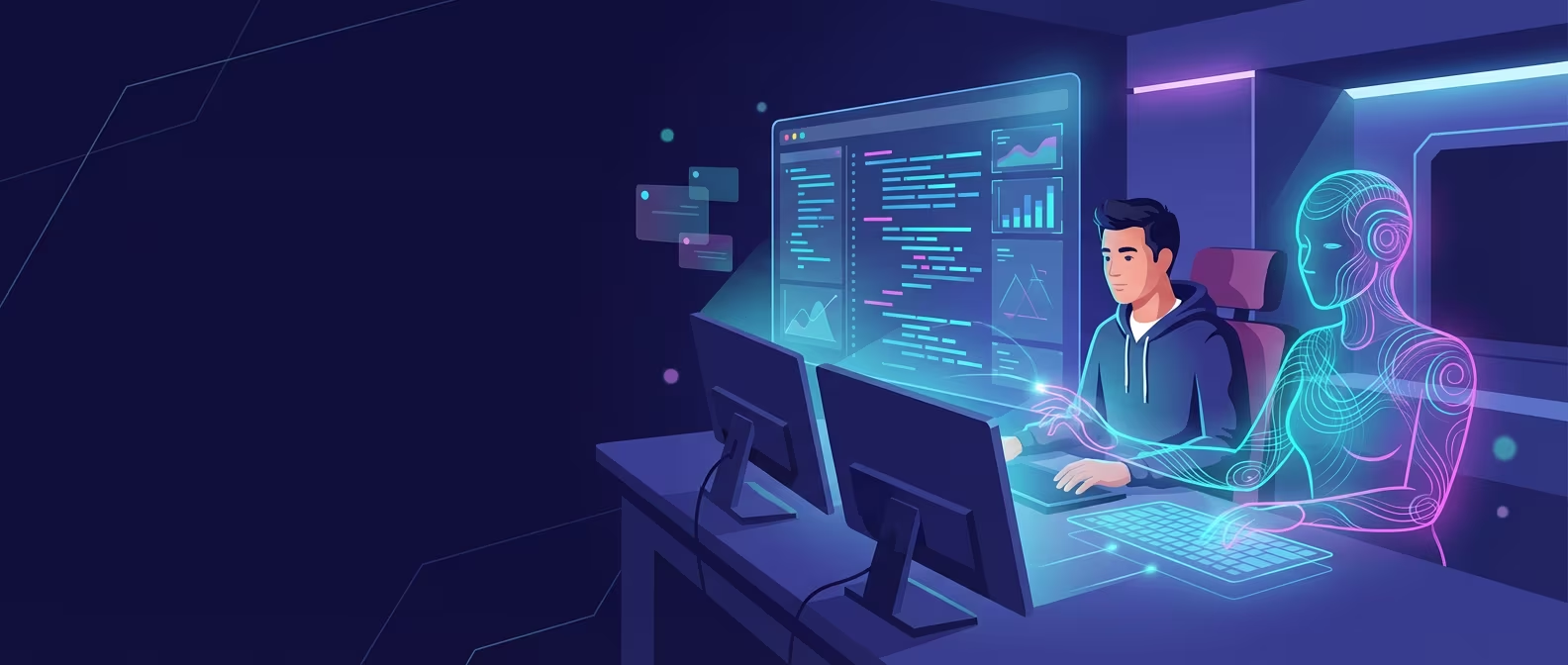
A year-end conversation with Claude Opus where we gaze into the crystal ball and write down eight predictions for 2026 - from Claude Code's office version to the first major AI-caused employment crisis.
AI news, articles, and insights

A year-end conversation with Claude Opus where we gaze into the crystal ball and write down eight predictions for 2026 - from Claude Code's office version to the first major AI-caused employment crisis.

A comprehensive guide showing how artificial intelligence can enhance and streamline service design processes, from research and ideation to prototyping and testing.

In the past year, universal AI tools like ChatGPT have made significant advances in everyday usability, but their main limitation for businesses is access to organizational data and limited workflow automation capabilities. This article explores how Cassidy AI bridges this gap.

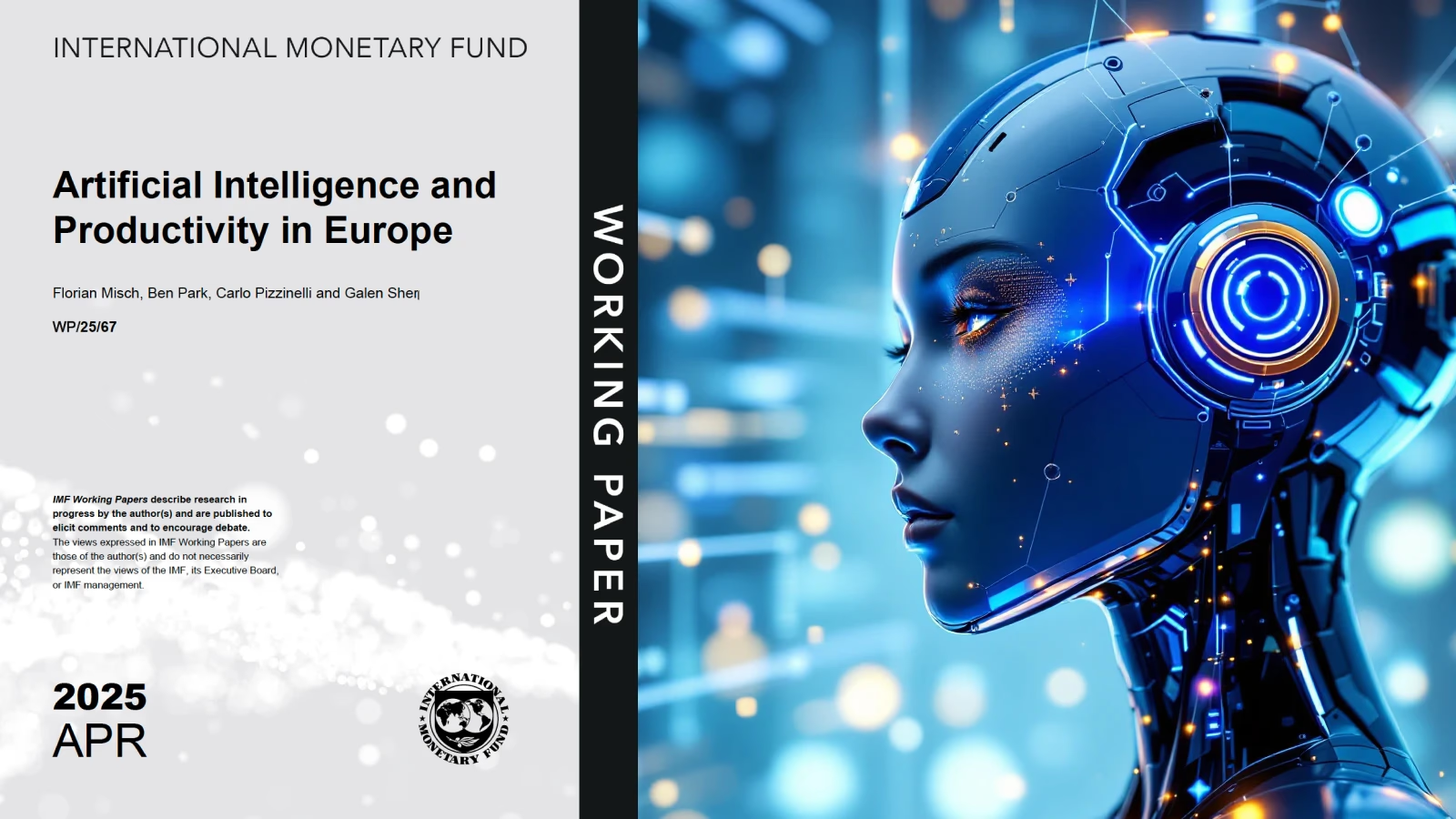
A recent IMF study suggests that AI's impact on European productivity growth may be quite modest over the next five years, challenging the widespread hype about transformative economic effects.

The release of OpenAI’s o1 model has stirred excitement across the AI community, with many expecting it to mark a new chapter in artificial intelligence. Early buzz has painted o1 as a potential game-changer, introducing advanced reasoning capabilities that could leapfrog the widely used GPT-4o. Some even speculate that o1 could completely replace GPT-4o as the default AI model for everyday tasks.
Hey there, tech enthusiasts and AI aficionados! 👋 Ready to dive into the wild world of generative AI apps? Buckle up, because we're about to take a rollercoaster ride through the latest trends and innovations that are shaping the future of consumer-facing AI. Let's get this party started!

There's been a lot of talk lately about whether AI lives up to the lofty expectations it set initially or if it's just hype. Some argue that the AI bubble has already burst or is about to collapse. Views on this range greatly, from direct criticism to more in-depth, subtle evaluations.

Hey there, future-focused friend! Ready to embark on a wild ride through the AI landscape? Buckle up, because we're about to leave the world of cat memes and ChatGPT pickup lines in our rearview mirror.

Imagine you’re leisurely scrolling through LinkedIn, your thumb flicking past post after post, each one vying for your precious attention. Suddenly, something makes you pause. What was it that caught your eye? That, my friend, is the magic of a compelling hook. In the fast-paced world of LinkedIn, where attention spans are shorter than ever, mastering the art of the hook is your ticket to standing out.

Deep within human nature lies a fear of the unknown. It's our survival instinct, which has been with us since the beginning of time, protecting us from potential dangers while preserving what has kept us alive so far. But how does this instinct for self-preservation affect our ability to embrace innovation? Especially now, as we witness one of the greatest technological revolutions of our lifetime - the implementation of artificial intelligence in organizations. People worry that AI might threaten their jobs, make their daily tasks more complicated, or even replace their current tools with something completely unfamiliar. Naturally, this creates resistance.


Getting the most out of lengthy meetings can be challenging. After 2.5 hours, it's often difficult to remember where the discussions started and the conclusions reached in between. However, thanks to AI technology, we now have the ability to transcribe and summarize meetings more quickly, which significantly enhances the discussion.

How do Solarpunk design principles influence urban planning in envisioning sustainable and hopeful futures?

Are OpenAI's Days Now Numbered? Anthropic's New Model Claude 3 Opus Outperforms GPT-4 in Benchmarks. What Does This Mean and How Did This All Become Possible?

Communication, collaboration, and productivity are key aspects of success in the modern business world. Organizations need to find new ways to optimize these factors. This article explores how ChatGPT Teams and Copilot for Microsoft 365, two tools that use artificial intelligence to enhance how people work and cooperate, can benefit organizations in different scenarios and what factors to consider when choosing which tool to use.

In the ever-evolving landscape of project management, integrating the capabilities of artificial intelligence has become paramount. AI technology is reshaping how we plan, execute, and monitor projects. Thus, it's crucial for project managers to understand how to weave AI into their existing workflows. This article delves into the utilization of advanced language models like GPT-4 for planning and executing projects. What are the ways AI can assist in the initial stages of a project? How can it streamline execution and monitoring? And finally, how might AI aid in wrapping up a project effectively?

In the digital era, the quest for knowledge is relentless and demands a more agile approach to learning. Enter ChatGPT – an advanced language model with the capacity to revolutionize the educational landscape. But how exactly can this technological marvel amplify our learning capabilities? This article unveils its potential, examining in-depth how leveraging ChatGPT can turn you into a fast learner. Through personalized tutoring, bespoke study assistance, test creation, language learning, and information summarization, ChatGPT holds the key to unlocking a more efficient and tailored educational experience. Let's unravel the methods by which ChatGPT can enhance your knowledge acquisition, transforming the way you learn.

OpenAI now offers the exciting opportunity to create personal GPTs and integrate them with proprietary data. This brings up crucial questions: How does OpenAI manage this data? More importantly, can users of GPTs access and download the proprietary data files they upload?
Emoticons allow professionals to showcase personality and approachability on LinkedIn, but require thoughtful usage to come across as authentic. When used intentionally, emoticons can humanize your personal brand and help you connect with your audience. However, excessive or misaligned emoticon use risks undermining your professionalism.

Image generator DALL·E 3 is here, available to everyone, and initial experiments suggest that this is one of the best AI image creators at the moment. To help you get up to speed with DALL-E faster than I did, I've written down some practical tips and introduced different types of prompts that allow you to coax slightly higher quality results out of DALL·E 3. In other words, this post is suitable for both those taking their first steps in the world of AI image creation, as well as those who want to improve their DALL·E 3 skills.

As we navigate the ever-evolving landscape of technology, it's clear that the tools we use to communicate our brand messages are changing. Generative AI has emerged as a powerful tool for creating visual and text content, opening up new possibilities for how we present our brands to the world. However, this shift also presents a challenge: our current branding guidelines have not yet adapted to incorporate these new tools.

In the evolving landscape of AI art, Midjourney introduces itself as a notable AI generator, designed to transform textual inputs into compelling visual outputs. At its core, Midjourney leverages advanced AI algorithms to interpret and visualize user prompts. Midjourney integrates seamlessly with Discord, enabling users to easily generate images through simple text commands within a familiar chat interface.

OpenAI recently released Dall-E 3, and it's got people talking. Many of us have been loyal to Midjourney for AI image creation since its version 4, but could Dall-E 3 give it a run for its money?

As we step into the future of technology and entertainment, AI Video is gearing up to take center stage, revolutionizing the way we create, consume, and interact with visual content, but is it ready for the prime time debut? Let’s find out!

Artificial Intelligence (AI) is rapidly transforming the world, ushering in what many are calling the fourth industrial revolution. However, this transformation brings with it a significant challenge: the need for upskilling and reskilling of the workforce to adapt to the changing landscape. This essay will delve into the implications of AI on the workforce, the importance of upskilling and reskilling initiatives, and the role of organizations in facilitating these changes.

In today's rapidly evolving digital landscape, businesses are constantly seeking innovative ways to create engaging and valuable content for their audiences. As the world embraces artificial intelligence (AI), the use of generative AI tools for content creation is gaining traction. In this article, we will explore why companies prioritize blogs as a key marketing tool and delve into the question of whether AI should be used for blog writing.

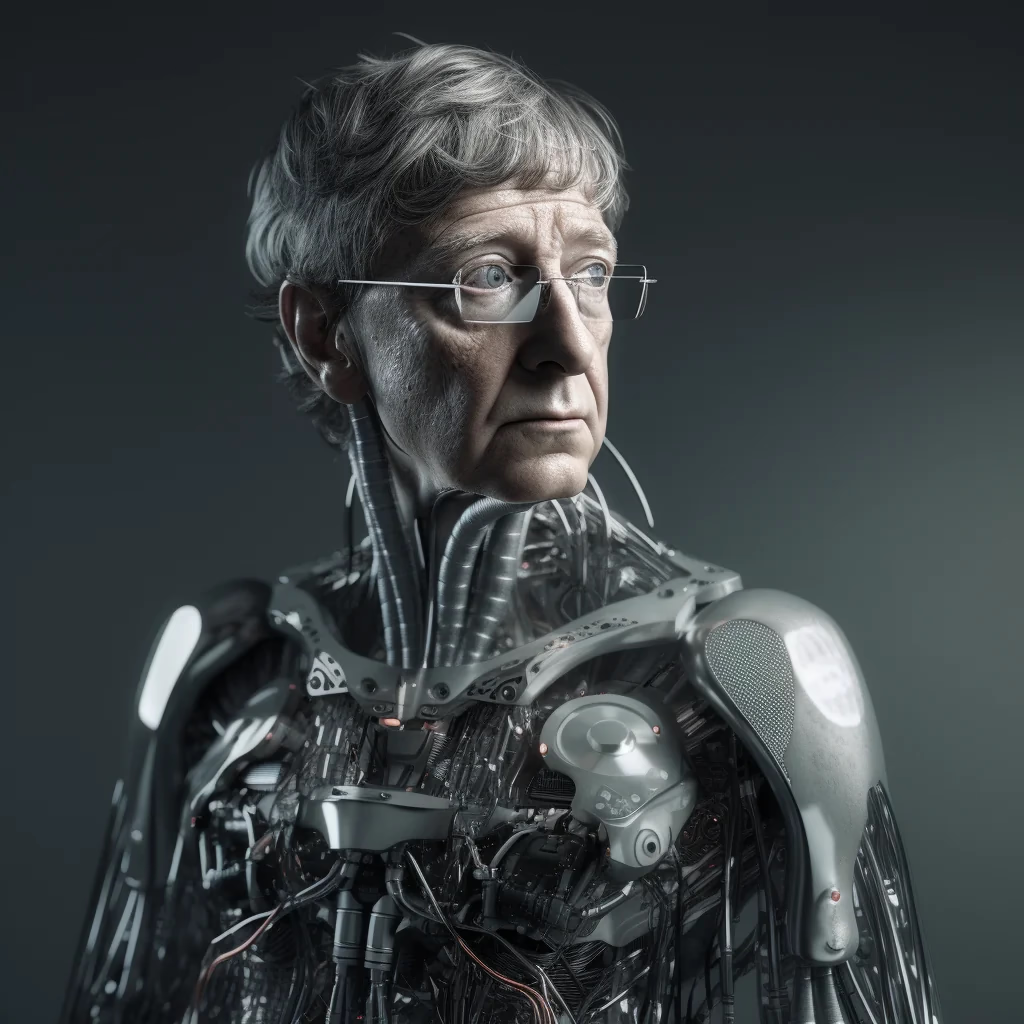
This is a two part blog post analysing the recent “ground breaking” article “The Age of AI has Begun” from Bill Gates.

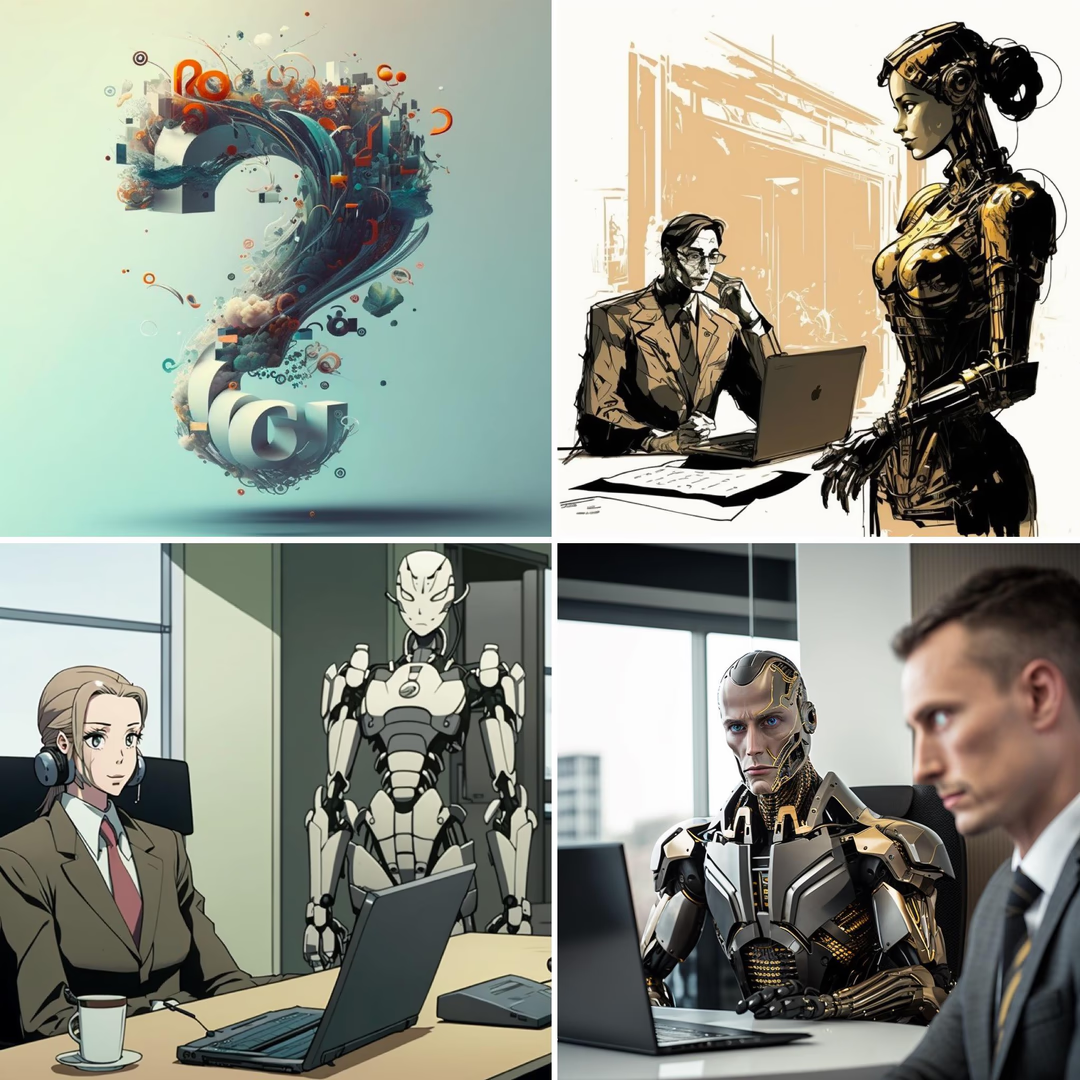
Who will be first, and who among us will be last? AI is here to stay, but what does it mean for us in terms of jobs?

Artificial intelligence (AI) is not only transforming how we work, learn and communicate, but also how we create, appreciate and value art.

2022 was the year of generative AI, but what happens next year?

Image generation AIs like Midjourney or Stable Diffusion are attracting new users in millions. But why?